
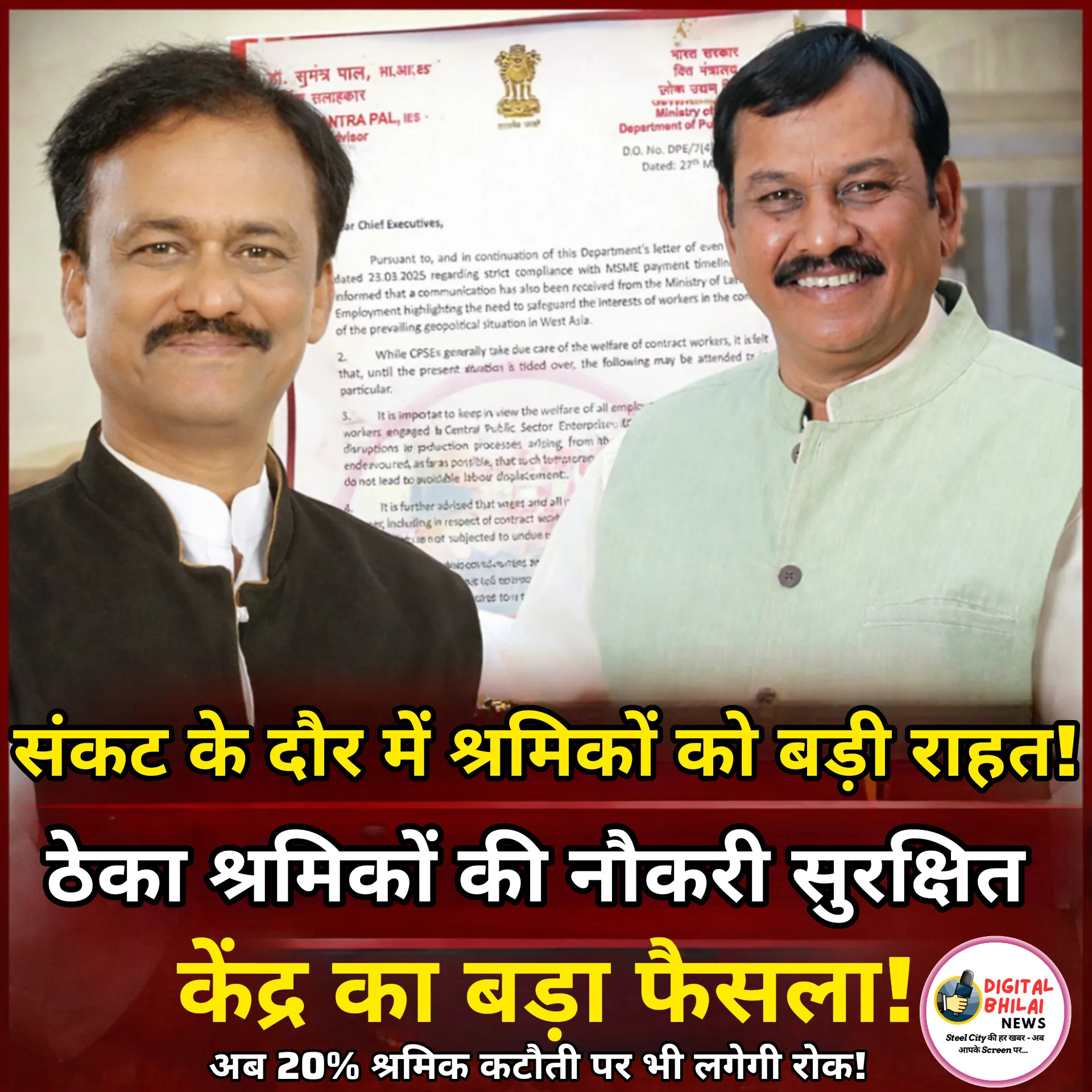
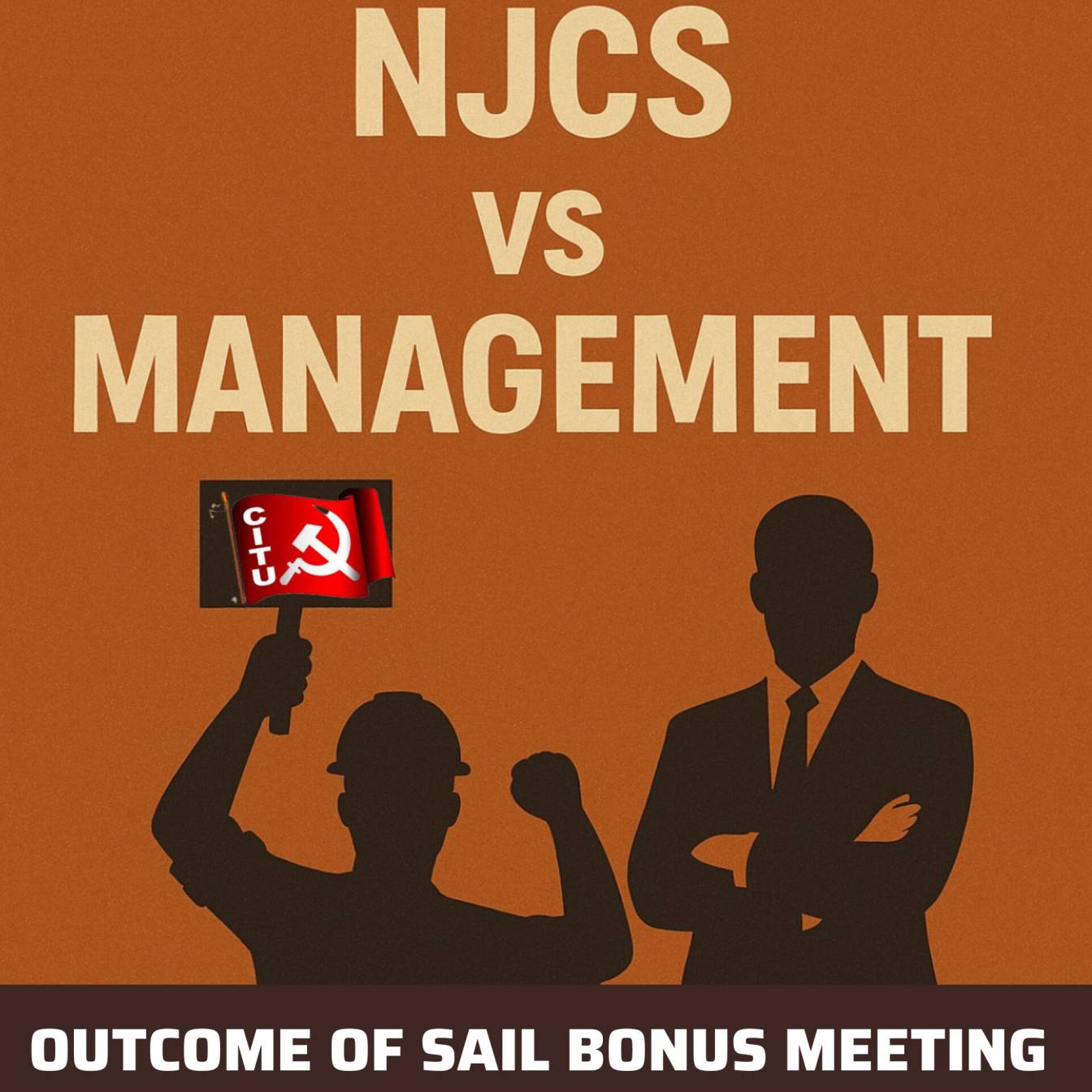
Outcome of the ASPLIS (Bonus) Subcommittee Meeting in Steel Industry – CITU
– DIGITAL BHILAI NEWS –
– 20 – SEPTEMBER – 2025 – (News From CITU/SWFI Leaders)
Comrades Lalit Mohan Misra (National Secretary, CITU; General Secretary, SWFI) and Biswarup Bandyopadhyay attended the meeting on behalf of CITU/SWFI.
- At the outset, all workers’ representatives demanded a total review of the so-called ASPLIS/Bonus formula, which had earlier been accepted by all unions except CITU and AITUC.
- This retrograde formula has led to a sharp reduction in workers’ bonus payments in 2023 and 2024 compared to 2022, despite continuous increases in production performance.
Read This article also :- 18 Months Without NJCS Meeting: Over 40 Issues of SAIL Employees Still Pending, Case Reaches Court
Workers’ Position and Demands🙏
The workers’ representatives clearly stated that:
👉The ASPLIS/Bonus payment must not be less than ₹40,500, as was paid in 2022.
👉This demand is justified as production performance has increased every successive year, including 2025.
👉Pending issues under NJCS, such as 39 months’ arrears, additional increment for all, wage revision, and pay-structure correction for contract workers, must be taken up immediately in the interests of industrial peace and smooth functioning of production activities.
Read This article also :- Unfair Bonus Formula Sparks Workers’ Anger – RAKS Demands Production Related Pay
Management’s Stand – Rejected❌ by Workers
👉The management insisted on continuing with the same ASPLIS/Bonus formula and offered ₹29,500.
👉This proposal was unanimously rejected by workers’ representatives.
👉A proposal of ₹32,500 later emerged during deliberations, but CITU strongly objected, reiterating the already stated demand of minimum ₹40,500 and refusing to compromise below ₹31,000.
👉The management refused to agree even to this reduced figure and did not respond to the demand for holding an NJCS meeting.
Read This article also :- SEFI Demands Action on 3rd-Party Housing in BSP Township
Arrogance and Anti-Worker Attitude
👉CITU condemned the arrogant and autocratic approach of the management, which refused to show flexibility or respect workers’ legitimate demands. This attitude has only increased resentment among workers.
❗Conclusion – Call for Struggle ?
❗The meeting ended without any conclusion due to management’s rigid stance.
❗CITU and SWFI leadership has called upon all unions and workers to:
- Unite and intensify struggles at the plant and establishment level.
- Launch agitations and campaigns to press for legitimate entitlements.
- Continue fighting until the ASPLIS formula is corrected and workers receive their rightful bonus.
Key Rights of Unions
-
The union has the right to organise, register under the Trade Unions Act, 1926, and represent workers within the plant.
-
The union may engage in collective bargaining covering wages, allowances, work conditions, social security, and revision of benefits.
-
The union can raise grievances, initiate industrial disputes and demand dialogue with management and relevant authorities.
-
If management avoids talks or fails to implement agreements, the union may consider escalation including industrial action.
-
However, the union’s right to strike is not absolute—it operates within a legal framework subject to specific conditions.
When Can a Strike Be Laid?
In a public sector steel plant, which may be designated a “public utility service” (under the Industrial Disputes Act, 1947), a union may only lawfully strike if:
-
A proper written notice has been given to the employer in advance.
-
The required cooling-off or notice period (often 14 days or as prescribed) has elapsed.
-
The conciliation or settlement process is completed or the specified waiting period after conciliation has passed.
-
If procedural pre-requisites are not observed, the strike may be declared illegal and union members lose legal protection.
India’s Trade Unions – Key Points
-
India’s labour movement began during late 19th-century industrialisation under British rule.
-
The earliest known worker organisation was Bombay Mill Hands’ Association (1890).
-
First modern structured union: Madras Labour Union (1918), led by B. P. Wadia.
-
Unions formed due to harsh working conditions — low wages, long working hours, unsafe workplaces, & no representation.
-
A major milestone was the creation of AITUC (All India Trade Union Congress) in 1920, becoming India’s first national-level trade union body.
-
Prominent early leaders included Lala Lajpat Rai, N. M. Joshi, Joseph Baptista, etc.
-
Their objectives included wage improvement, job security, workers’ safety, and social equality.
-
Trade Unions gained legal status through the Trade Unions Act, 1926.
-
The Act ensured:
-
Union registration process
-
Limited liability protection
-
Legal recognition of collective workers’ groups
-
-
Unions became part of the freedom movement as many nationalist leaders participated.
-
Post-independence, multiple national federations emerged, including INTUC, HMS, CITU, BMS, UTUC etc.
-
Challenges continued: multiple unions in one workplace, political influence, weak organisation in unorganised sectors.
-
Trade unions moved from protests & strikes toward structured bargaining and settlement mechanisms over time.
-
Later reforms sought to balance workers’ rights and industrial productivity.
-
Even today, unions play a key role in wage negotiation, workplace safety, labour welfare & dispute resolution.
Read next article :- NPS Reforms 2025: PFRDA ने प्रस्तावित किए बड़े बदलाव, जानिए निवेशकों और रिटायरमेंट प्लानिंग पर असर
Report – DIGITAL BHILAI NEWS

K.D. एक अनुभवी डिजिटल पत्रकार और वेब स्ट्रैटेजिस्ट हैं, जिन्हें वेब मीडिया, लोकल अफेयर्स में कई वर्षों का अनुभव है। वे स्टील इंडस्ट्री, पब्लिक सेक्टर कंपनियों, कर्मचारियों की नीतियों (NPS, EPFO, PRP, Leave Policy) और छत्तीसगढ़ से जुड़ी औद्योगिक खबरों को सरल और भरोसेमंद अंदाज़ में प्रस्तुत करते हैं। Digital Bhilai News का उद्देश्य है — औद्योगिक क्षेत्र की वास्तविक और जमीनी रिपोर्टिंग के माध्यम से पाठकों को मूल्यवान जानकारी देना। हमारी लेखन शैली रिसर्च-आधारित और विश्लेषणात्मक होती है, जिससे हर खबर में डेटा, पृष्ठभूमि और असर दोनों शामिल रहते हैं। हम भिलाई और विभिन्न संयंत्र से जुड़ी श्रमिकों-कर्मियों के साथ हो रहे अन्याय आदि की खबरें तथ्यों, विश्लेषण और आधुनिक डिजिटल दृष्टिकोण के साथ पाठकों तक पहुंचाने का प्रयास कर रहे है।