
Income Tax Department Detects ₹700 Crore Fake Exemption Scam Using AI
– DIGITAL BHILAI NEWS –
– 21 – SEPTEMBER – 2025 –
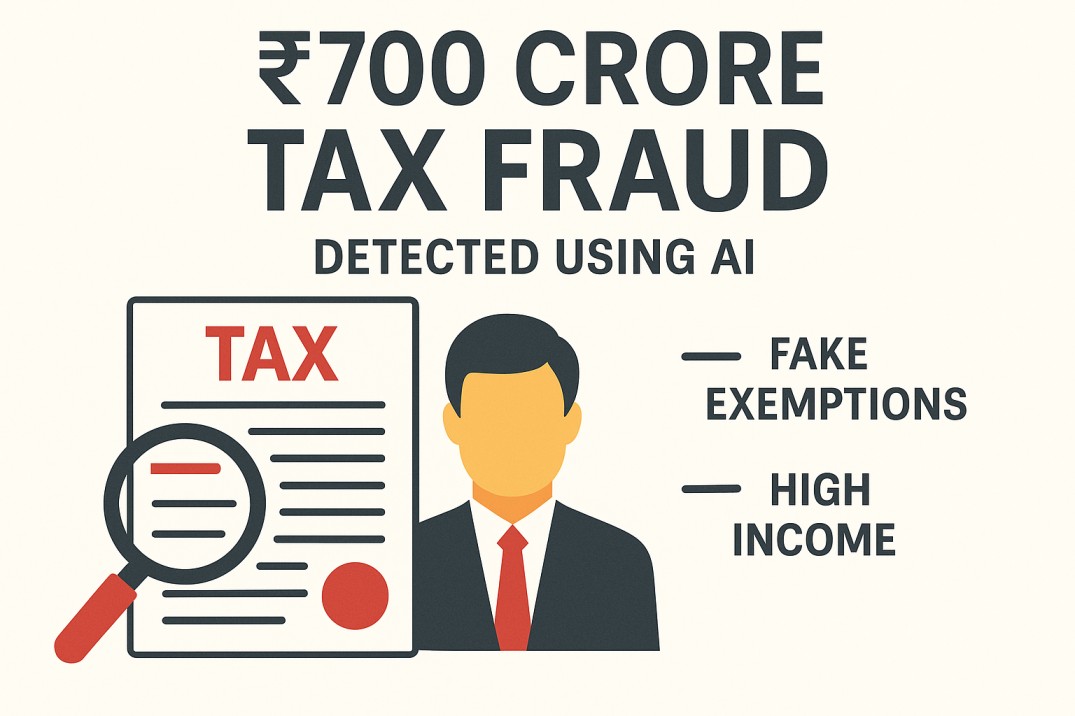
New Delhi: The Income Tax Department of India has unearthed a massive ₹700 crore fraudulent exemption racket. Taxpayers were found making fake claims of medical expenses and donations under the Old Tax Regime to wrongfully reduce their tax liability.
This discovery signals one of the biggest crackdowns on tax evasion in recent times, with the department increasingly relying on Artificial Intelligence (AI) and data analytics to identify inconsistencies in Income Tax Returns (ITRs).
Read This Shocking News –
How the Scam Was Detected?🔎
For years, many taxpayers have been exploiting loopholes in the exemption system by inflating medical bills, religious donations, and other deductions to reduce their tax liability.
In this case, the Income Tax Department applied advanced automated validation tools (advanced AI-driven data analytics) to cross-check returns and spotted suspicious patterns.
This is done to track high-income individuals, especially those with income above ₹20 lakh per year.
-
Fraudulent claims were identified through automated cross-checking.
-
Most fake exemptions came from inflated medical bills and unverifiable donation receipts.
-
Notices have been issued to such taxpayers, asking them to revise and file updated ITRs.
Officials clarified that this verification process may cause delays in refunds this year compared to 2024, as stricter scrutiny is being applied.
Big Action on Fake Deductions❗
In mid-2025, the department launched a Nudge Campaign aimed at encouraging taxpayers to voluntarily correct their returns. The results have been significant:
-
40,000+ taxpayers revised their ITRs after receiving notices.
-
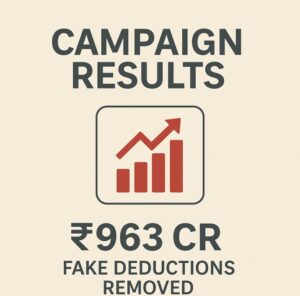
₹963 crore worth of fake deductions were withdrawn.
-
An additional ₹409.50 crore was collected in taxes by June 2025.
-
More than 30,161 taxpayers disclosed foreign assets worth ₹29,208 crore.
-
Additional undisclosed income of ₹1,089 crore was reported.
This large-scale compliance push highlights the effectiveness of AI-driven risk assessment in plugging loopholes in the tax system.
Impact on Genuine Taxpayers❓
While the crackdown primarily targets fraudulent filers, ordinary taxpayers may notice a slight delay in refunds due to additional verification layers.
-
Honest taxpayers with genuine exemption claims have nothing to worry about.
-
However, fake claimants risk heavy penalties, interest charges, and even prosecution under income tax laws.
-
Tax professionals assisting in fraudulent claims are also under investigation, with raids conducted at multiple locations.
Experts suggest that this drive sends a strong signal that the era of easy fake deductions is over.
Why AI is a Game-Changer in Tax Administration❓
The Income Tax Department has historically struggled to detect small fraudulent claims scattered across millions of returns. Manual audits were not efficient enough.
By adopting Artificial Intelligence and Machine Learning, the department can now:
-
Spot unusual deduction trends.
-
Cross-verify claims with third-party data (hospitals, donation trusts, etc.).
-
Flag high-risk taxpayers automatically for further scrutiny.
-
Improve efficiency and reduce refund frauds in the long run.
This digital transformation is expected to make India’s tax ecosystem smarter, transparent, and fairer.
What Taxpayers Should Keep in Mind
If you are filing under the Old Tax Regime, exemptions and deductions remain available, but they must be supported with valid documents.
Here are some key reminders for taxpayers:
-
Keep all medical bills and donation receipts properly documented.
-
Avoid inflating or fabricating expenses—AI-powered scrutiny makes it harder to get away with false claims.
-
File returns honestly and on time to avoid penalty notices.
-
Consider the New Tax Regime if you don’t have sufficient valid deductions, as it offers lower tax rates with fewer compliance headaches.
Conclusion
The detection of ₹700 crore fraudulent exemption claims is a turning point for India’s tax administration. By leveraging AI-powered verification systems, the Income Tax Department has proven that even high-income groups are not beyond its radar.
For taxpayers, the message is clear:
👉 Be transparent, keep records ready, and file genuine claims only.
The new system is designed to reward compliance and penalize dishonesty.
This crackdown not only safeguards government revenue but also builds trust among honest taxpayers, ensuring that the burden of fraud does not fall on law-abiding citizens.
READ THIS NEWS ALSO : – Outcome of the ASPLIS (Bonus) Subcommittee Meeting in Steel Industry – CITU

K.D. एक अनुभवी डिजिटल पत्रकार और वेब स्ट्रैटेजिस्ट हैं, जिन्हें वेब मीडिया, लोकल अफेयर्स में कई वर्षों का अनुभव है। वे स्टील इंडस्ट्री, पब्लिक सेक्टर कंपनियों, कर्मचारियों की नीतियों (NPS, EPFO, PRP, Leave Policy) और छत्तीसगढ़ से जुड़ी औद्योगिक खबरों को सरल और भरोसेमंद अंदाज़ में प्रस्तुत करते हैं। Digital Bhilai News का उद्देश्य है — औद्योगिक क्षेत्र की वास्तविक और जमीनी रिपोर्टिंग के माध्यम से पाठकों को मूल्यवान जानकारी देना। हमारी लेखन शैली रिसर्च-आधारित और विश्लेषणात्मक होती है, जिससे हर खबर में डेटा, पृष्ठभूमि और असर दोनों शामिल रहते हैं। हम भिलाई और विभिन्न संयंत्र से जुड़ी श्रमिकों-कर्मियों के साथ हो रहे अन्याय आदि की खबरें तथ्यों, विश्लेषण और आधुनिक डिजिटल दृष्टिकोण के साथ पाठकों तक पहुंचाने का प्रयास कर रहे है।